


Want to learn more? Schedule a demo.
Turn Facts into Clear Chronologies
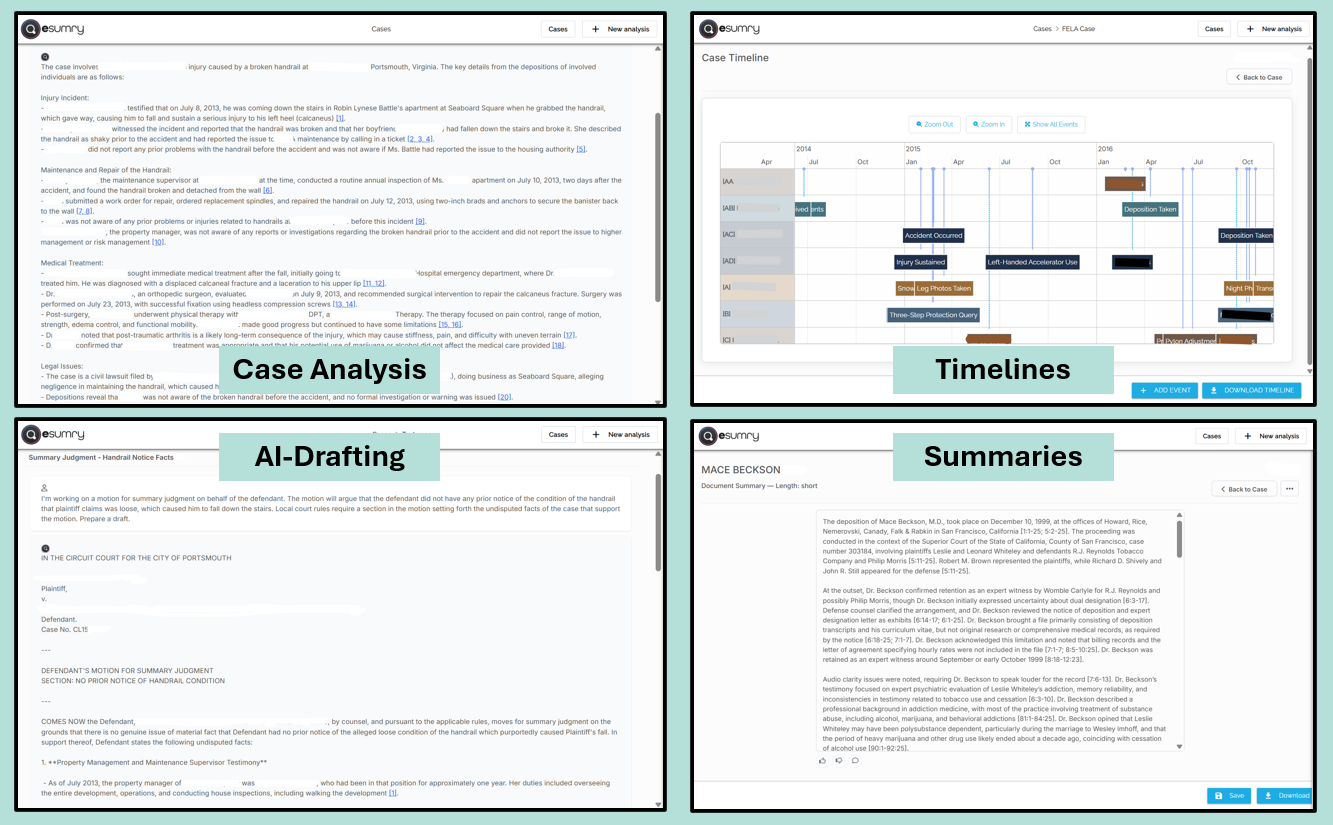
esumry instantly extracts events from each case document and organizes them into chronological and other views. That makes it fast and easy to see the story of the case.
Strengthen Strategy on Motions and Settlement
Timelines often surface strategic insights that aren’t obvious from individual documents. By seeing how events line up over time, defense attorneys can better assess their position, identify inflection points, and plan motion practice or settlement discussions.
Connect Events to Source Evidence
Each event can be tied back to a document or transcript excerpt that supports it. That gives trial teams a fast path from the big picture to the underlying evidence when drafting, negotiating, or preparing for trial.
Exportable for Hearings, Mediation, and Trial Prep
Timelines can be exported to Excel® or Word® for use in mediation, trial preparation, or internal meetings. They update automatically as new documents are added, which saves time over manually editing static spreadsheets.
Timelines & Chronologies – Frequently Asked Questions
-
Yes. They’re designed as working tools for lawyers to refine, then export in whatever format is required for the specific use case.
-
Yes. Lawyers choose which events to include, how detailed each entry should be, and how to group events for specific audiences.
-
Yes. Each event is linked to the specific page in the source document, whether it is a pleading, medical record, transcript or something else.
-
Many teams start using esumry to build and update chronologies, then export for final formatting or sharing. It reduces the manual effort of maintaining long lists as the case evolves.
-
Yes. Lawyers can choose how far back to go and what to include, from single incidents to multi-year sequences.