

Want to learn more? Schedule a demo.

Make Sense of Medical Records Faster
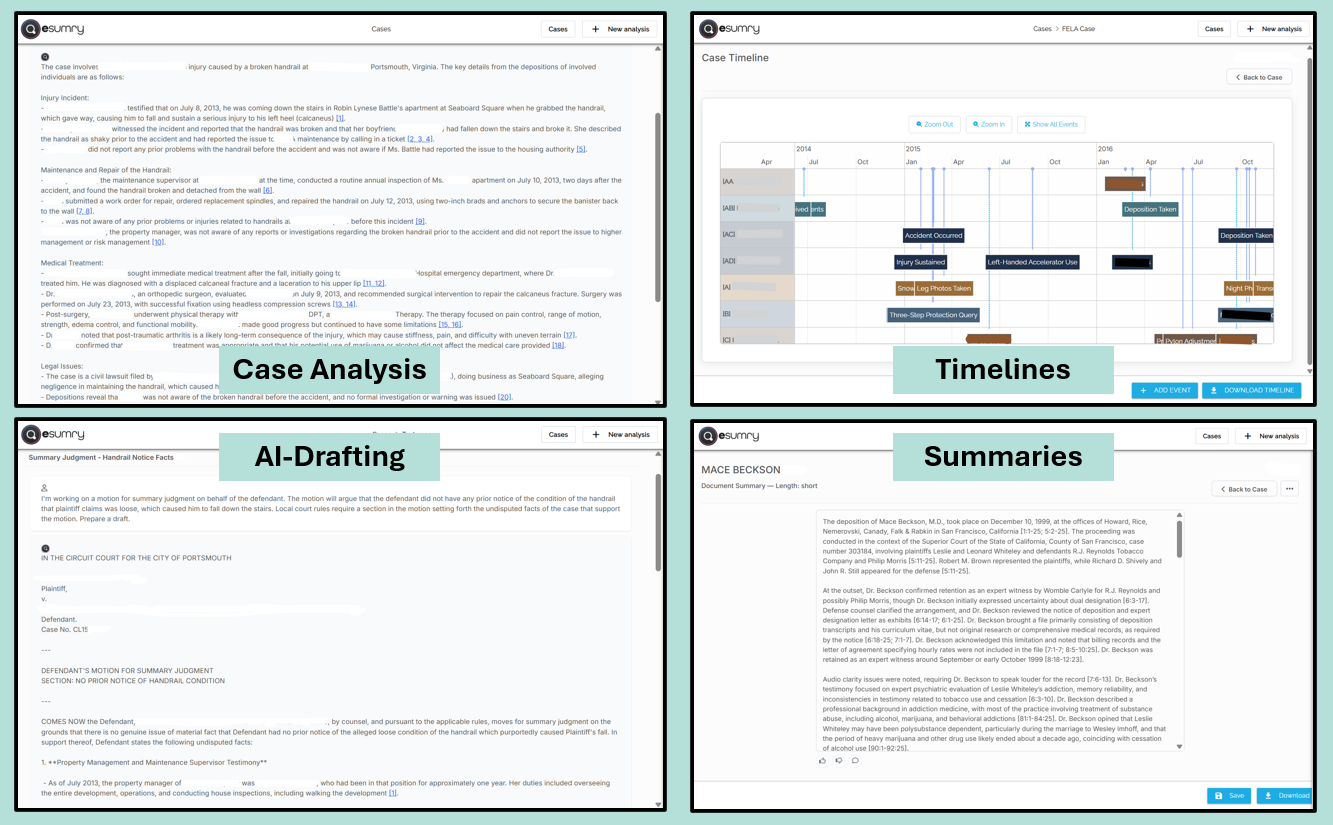
Medical records are often voluminous, inconsistent, duplicative, and difficult to review quickly. esumry helps defense teams process medical records, including handwritten records, and identify important treatment events, providers, dates, diagnoses, complaints, procedures, medications, and follow-up care.
Build Treatment Timelines from the Record
esumry extracts medical events and organizes them chronologically so the defense team can see the treatment story as it developed over time. That makes it easier to understand pre-incident history, post-incident care, gaps in treatment, changes in complaints, referrals, imaging references, therapy, procedures, and claimed ongoing limitations.
Draft Narrative Medical Treatment Summaries
esumry can generate a draft narrative medical treatment summary for each of the medical records. Defense teams can use the draft as a starting point, then review, refine, and adapt it for the needs of the case.
Connect Medical Events to Source Records
Medical analysis is only useful if the team can verify it. esumry timelines and summaries are linked to the underlying records so users can review the source material, confirm accuracy, and apply professional judgment before relying on any output.
For Bodily Injury, Medical Malpractice, Product Liability, and Other Defense Matters
Medical records can drive valuation, causation analysis, expert strategy, deposition preparation, and settlement posture. esumry gives defense teams a faster way to understand the entire medical record, including claimed injury, treatment history, medical causation, damages, or disputed care.
Reduce Manual Review Time and Improve Consistency
Manual medical record review is time-consuming and difficult to standardize across teams, matters, and firms. esumry helps reduce repetitive review and drafting time while promoting more consistent medical chronologies and treatment summaries.
Built for Confidential Medical Information
esumry is built for sensitive litigation data, including medical records. The platform is HIPAA compliant, and a Business Associate Agreement can be provided if required.
Defense teams remain responsible for reviewing and finalizing work product.
Medical Analysis – Frequently Asked Questions
-
esumry can analyze text-based medical records and record productions, including provider notes, hospital records, therapy records, operative reports, discharge summaries, medication lists, billing-related records, and similar materials.
-
Yes. esumry can extract treatment events and organize them into a timeline so defense teams can quickly understand the sequence of care, providers, complaints, procedures, referrals, and follow-up treatment.
-
Yes. esumry can draft a narrative treatment summary from uploaded medical records. The draft is intended to give attorneys and paralegals a strong starting point that they can review, edit, and finalize for the needs of the matter.
-
No. esumry does not replace attorney judgment, medical expert analysis, or professional review. It helps organize records, surface key information, and draft initial work product so the legal team can review the material more efficiently and apply judgment more effectively.
-
Yes. esumry is source-linked so users can trace medical events and summary content back to the underlying records. That helps teams validate outputs before relying on them in case analysis, reporting, mediation, expert work, or trial preparation.
-
Yes. esumry is HIPAA compliant. A Business Associate Agreement (BAA) can be provided if required.
-
esumry can help analyze medical record documents that include readable text and OCR-supported content. Results may vary depending on the quality, legibility, and format of the records, so users should always review the source material and final outputs.
-
No. esumry is not intended to interpret true medical image files or diagnostic images. If a radiology report, EMG report, or similar written report is included in the records, esumry can analyze the text of that report, but it does not interpret the underlying image itself.
-
Defense attorneys, paralegals, litigation support teams, and claims-focused legal teams can use Medical Analysis to understand treatment history, prepare summaries, build chronologies, support expert review, and move more quickly from records to strategy.
-
It helps outside counsel and defense teams reduce the time spent manually reviewing and summarizing medical records. That can lead to faster case understanding, more consistent reporting, better preparation for key events, and fewer hours spent on repetitive record review and drafting.
-
Yes. Medical timelines and treatment summaries can be used as working litigation tools for mediation preparation, expert review, deposition preparation, claim evaluation, case updates, and trial preparation, subject to attorney review and refinement.
-
No. Defense counsel and their teams decide what to upload, what to generate, what to edit, and what to share. esumry supports the workflow, but legal judgment and work product control remain with the professionals handling the matter.